

Dancing is joy, music, and movement, but dance words also fill our daily talk. We use idioms about dancing when we avoid a hard topic, follow a leader, or make too much fuss. A worker may dance around the issue in a meeting.
A shy guest may say he has two left feet. Some of these idioms are warm and fun. A few are sharp or even dark. This guide gives you 23 useful idioms about dancing, with clear meanings, simple examples, and honest tips on tone, so you can use each one well in daily talk.
Quick Answer?
Some of the best idioms about dancing are dance the night away, which means to dance all night with joy, have two left feet, a fun way to say you are a clumsy dancer, and step on someone’s toes, which means to upset or offend a person.
What Are Dancing Idioms?
Dancing idioms are fixed phrases that use dance words or dance-floor scenes. Their meaning is not always clear from each word alone. To dance around the issue does not involve music. It means you avoid the real topic. These idioms about dancing can sound playful, proud, shy, warm, or cross.
Quick Overview?
This table lists all 23 idioms about dancing, with short meanings and best contexts.
| # | Idiom | Short Meaning | Best Context |
|---|---|---|---|
| 1 | Dance to someone’s tune | Do what a stronger person wants | Work, family |
| 2 | Make a song and dance about something | Make too much fuss | British complaints |
| 3 | A song and dance | A long, fancy excuse | American English |
| 4 | Lead someone a merry dance | Waste time with false promises | British English |
| 5 | Dance around the issue | Avoid the real topic | Meetings, news |
| 6 | It takes two to tango | Both sides share the blame | Rows, shared work |
| 7 | Follow someone’s lead | Copy what a leader does | Dance, teams |
| 8 | Step on someone’s toes | Upset or offend a person | Work, family |
| 9 | In step / out of step | In time, or in line with others | Marches, views, groups |
| 10 | Have two left feet | Be a clumsy dancer | Parties, self-jokes |
| 11 | Dance the night away | Dance all night with joy | Weddings, parties |
| 12 | Put on your dancing shoes | Get ready to dance | Invites, nights out |
| 13 | Dance cheek to cheek | Dance very close to a partner | Romantic dances |
| 14 | Tear up the dance floor | Dance with great energy and skill | Clubs, parties |
| 15 | Cut a rug | Dance well with energy | Old US slang |
| 16 | Bust a move | Start dancing, show a move | Slang, friends |
| 17 | Throw shapes | Dance with energy to club music | British clubs, raves |
| 18 | Strut your stuff | Show skill with pride | Stage, dance floor |
| 19 | Trip the light fantastic | Go out dancing | Old, humorous talk |
| 20 | Dance like nobody’s watching | Dance freely, with no shame | Modern saying |
| 21 | Dance with death | Take a risk that could kill you | Danger, drama |
| 22 | Dance on someone’s grave | Celebrate a rival’s fall | Spite, revenge |
| 23 | All-singing, all-dancing | Fancy, with every feature | British products |
23 Useful Idioms About Dancing
1. Dance to someone’s tune
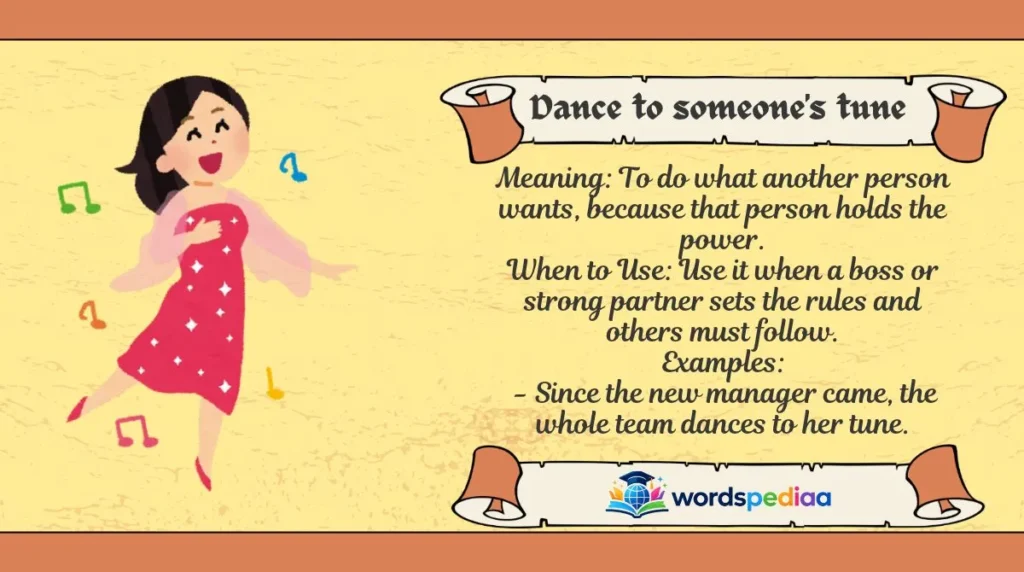
Meaning: To do what another person wants, because that person holds the power.
When to Use: Use it when a boss or strong partner sets the rules and others must follow.
Examples:
– Since the new manager came, the whole team dances to her tune.
– He pays the rent, so his flatmates dance to his tune at home.
2. Make a song and dance about something
Meaning: To make far too much fuss about a small thing.
When to Use: British English. Use it when a person complains loudly about a small thing.
Examples:
– It was one small scratch, but Dad made a song and dance about it all day.
– Please fix the form quietly; do not make a song and dance about it.
3. A song and dance
Meaning: A long, fancy story or excuse that hides the simple truth.
When to Use: American English. Use it for a big, false reason given instead of a short, honest one.
Examples:
– He gave me a long song and dance about traffic, but he just woke up late.
– The shop sent a full song and dance about fees instead of one clear price.
4. Lead someone a merry dance
Meaning: To waste a person’s time with false promises.
When to Use: British English. Use it when someone keeps you waiting and hoping for no real gain.
Examples:
– The seller led us a merry dance for weeks, then sold the flat.
– She felt the agent had led her a merry dance with promises of a job.
5. Dance around the issue
Meaning: To talk near a topic but avoid saying the hard part.
When to Use: Use it in meetings, talks, and news when a person will not give a straight answer.
Examples:
– The minister danced around the issue and never said if taxes would rise.
– Stop dancing around the issue and tell me what went wrong.
6. It takes two to tango
Meaning: Both sides share the work or blame in a shared act.
When to Use: Use it when two people argue or fail together and one side blames the other alone.
Examples:
– Do not blame her for the fight; it takes two to tango.
– Our plan failed because both teams were slow — it takes two to tango.
7. Follow someone’s lead
Meaning: To do what a leader does, in dance or in daily life.
When to Use: Use it for a dance partner, a team, or a child copying an adult.
Examples:
– In class, the new dancers watched the teacher and followed her lead.
– When the boss stayed calm, the staff followed his lead and kept working.
8. Step on someone’s toes
Meaning: To upset or offend a person, often by taking over their role.
When to Use: The common sense is to offend. On a dance floor, it can mean a real step on a foot.
Examples:
– I did not mean to step on your toes; I only wanted to help you.
– New dancers often step on toes until they learn the basic steps.
9. In step / out of step
Meaning: In time with the music, or in line with what others do and think.
When to Use: Use it for marches and group dances, or for views that match or clash with a group.
Examples:
– The soldiers marched in step down the wide street.
– His views on dress are out of step with the rest of the office.
10. Have two left feet
Meaning: To be a clumsy dancer who cannot follow the steps.
When to Use: People say it about themselves with a laugh, to refuse a dance or excuse poor steps.
Examples:
– I would love to join, but I have two left feet and will spoil the dance.
– Uncle Joe has two left feet, yet he dances at every wedding with joy.
11. Dance the night away
Meaning: To dance all night, full of joy, at a party.
When to Use: Use it for weddings, parties, and festivals where people dance until late.
Examples:
– At her wedding, Aisha and her friends danced the night away.
– The whole village danced the night away at the harvest fair.
12. Put on your dancing shoes
Meaning: To get ready to dance and enjoy a fun night out.
When to Use: Use it as a warm invite before a party or a music night.
Examples:
– The band starts at eight, so put on your dancing shoes and come early.
– After a hard week, Sara put on her dancing shoes and went out.
13. Dance cheek to cheek

Meaning: To dance very close to a partner, cheeks almost touching.
When to Use: Use it for slow, romantic dances. It has a soft, loving tone.
Examples:
– The old couple danced cheek to cheek to their wedding song.
– At the ball, pairs danced cheek to cheek under soft lights.
14. Tear up the dance floor
Meaning: To dance with great energy and skill and win all eyes.
When to Use: Modern and informal. Use it for strong, fast dancing at clubs and parties.
Examples:
– The twins tore up the dance floor with their fast, clean moves.
– Once the DJ played her song, Maya tore up the dance floor.
15. Cut a rug
Meaning: To dance well, with energy and joy.
When to Use: Old American slang. It sounds dated but fun, and fits retro talk.
Examples:
– Grandpa may be eighty, but he can still cut a rug at family parties.
– The pair cut a rug to the old jazz songs all evening.
16. Bust a move
Meaning: To start dancing or to show a bold, fun dance move.
When to Use: Slang. Use it with friends when someone jumps in with a fun move.
Examples:
– When his song came on, Leo busted a move in the middle of the room.
– Go on, bust a move — the floor is yours.
17. Throw shapes
Meaning: To dance with energy and free, bold moves.
When to Use: British informal talk, mostly about clubs and dance music, with free moves.
Examples:
– The crowd threw shapes until the club closed at dawn.
– He loves house music and throws shapes every Friday night.
18. Strut your stuff
Meaning: To dance or walk with pride and show your skill.
When to Use: Use it when someone proudly shows off talent, on a floor or a stage.
Examples:
– The young singer strutted her stuff in front of the happy crowd.
– It is your night — get out there and strut your stuff.
19. Trip the light fantastic
Meaning: To go out dancing in a light, happy way.
When to Use: An old, humorous phrase, used in jokes or light writing, not plain daily talk.
Examples:
– After dinner, the cousins went out to trip the light fantastic.
– Shall we trip the light fantastic at the hall tonight?
20. Dance like nobody’s watching
Meaning: To dance freely, with no shame or fear of watching eyes.
When to Use: A modern saying. Use it to urge joy and freedom, at parties or in life advice.
Examples:
– The music was loud, and she danced like nobody’s watching.
– My gran always says: sing loud, laugh hard, and dance like nobody’s watching.
21. Dance with death
Meaning: To take a risk that could kill you.
When to Use: A dramatic phrase for real danger, like fast driving on ice or climbing with no rope.
Examples:
– Riding that old bike on the icy road is dancing with death.
– The diver knew each deep dive was a dance with death.
22. Dance on someone’s grave
Meaning: To feel glad, or to celebrate, when a rival falls or dies.
When to Use: A spiteful phrase. It shows hate or revenge; use it only to describe such feelings.
Examples:
– He swore he would dance on his rival’s grave one day.
– She lost her job, but no one danced on her grave; all felt sad.
23. All-singing, all-dancing
Meaning: Fancy and full of every new feature or extra trick.
When to Use: British English, from old stage show bills. Use it for products or plans with every extra added.
Examples:
– Their new phone is an all-singing, all-dancing model with five cameras.
– The school built an all-singing, all-dancing hall with lights, screens, and a stage.
How to Use These Idioms Naturally
Many dancing idioms never touch a dance floor. Dance around the issue, dance to someone’s tune, and it takes two to tango are about talk, power, and blame. The true dance-floor set is smaller: two left feet, dance the night away, tear up the dance floor.
Watch the song and dance pair. In British English, to make a song and dance about something is to make too much fuss. In American English, a song and dance is a long, fancy excuse or story. Mixing them up can confuse your listener.
Mind tone and age. Bust a move and throw shapes are slang for friends, not formal writing. Cut a rug and trip the light fantastic sound old and playful. Dance with death is dramatic, and dance on someone’s grave is spiteful, so use both with care. One idiom per point is enough.
Practice Exercise
Fill each gap with the best idiom about dancing.
- The boss set every rule, and the whole office had to ________.
- Please answer me straight and stop ________ about the cost.
- I love music, but I have ________, so I never dance at weddings.
- Do not blame only him for the row; ________.
- When the old songs began, Grandma smiled and started to ________.
Answer Key
- dance to her tune — the boss held the power.
- dancing around the issue — he avoided the real topic.
- two left feet — she is a clumsy dancer.
- it takes two to tango — both sides share the blame.
- cut a rug — she danced with energy and joy.
Frequently Asked Questions
What is the most common idiom about dancing?
Dance around the issue and step on someone’s toes are very common, and both are figurative. For real dancing, use dance the night away.
What does “two left feet” mean?
It means a clumsy dancer who cannot follow the steps. People say it about themselves with a laugh, before a dance.
What is the difference between “make a song and dance” and “a song and dance”?
To make a song and dance about something (British) is to make too much fuss. A song and dance (American) is a long, fancy excuse.
Which dancing idioms sound dark or spiteful?
Dance with death is a risk that could kill you. Dance on someone’s grave is glad joy at a rival’s fall. Use both with care.
How can I learn idioms about dancing fast?
Learn two or three at a time and use them the same day. Hear them in songs, note the tone, and try them in talks.
Conclusion
Dance words can move far beyond the dance floor. Now you know 23 idioms about dancing, from the shy two left feet to the bold tear up the dance floor. Pick the one that fits, watch your tone, and use them in small daily talks.

Oliver Hayes is a passionate technology writer and digital marketing enthusiast with expertise in SEO, WordPress, blogging, and web development. He creates practical, well-researched content that helps readers learn new skills and stay updated with the latest trends in the digital world.